Source Virgin PTFE Plastic Extruding Rod for Seals, Gaskets, and Bushings
Compare 30 listings of virgin PTFE plastic extruding rod with varying densities, melting points, and working temperatures. Buyers can evaluate customization options, packing methods, and dimensional ranges to select the right material for industrial applications.
Key considerations
Products List




Comprehensive Sourcing Guide
Strategic Sourcing Guide for Virgin PTFE Plastic Extruding Rods
Understanding Material Fundamentals and Technical Specifications
When sourcing virgin PTFE (Polytetrafluoroethylene) plastic extruding rods, buyers must first distinguish between the raw material properties and the specific performance metrics of the extruded form. The core material is characterized by a high degree of chemical inertness and thermal stability, making it a premium choice for demanding industrial applications. Based on available market data, the density of these rods typically falls within the range of 2.1 to 2.3 grams per cubic centimeter (g/cm³), with specific extruded variants often cited between 2.15 and 2.25 g/cm³. This density is a critical baseline for calculating weight and volume in engineering designs.
The thermal profile of virgin PTFE is exceptionally broad. The working temperature range is consistently observed between -180°C and 260°C, with some specifications extending the upper limit to a produce maximum temperature of 390°C. The melting point, a crucial threshold for processing and safety, is generally recorded at 327°C to 330°C. Furthermore, the material exhibits extreme low-temperature resilience, with a brittle point temperature as low as -268°C, ensuring structural integrity in cryogenic environments.
Mechanical properties vary depending on the extrusion method and the specific formulation of the virgin resin. Tensile strength observations in the market range from 30 to 40 MPa for certain grades, while higher-performance extruded rods may demonstrate tensile strength between 81 and 130 MPa. Compressive strength is another vital metric, with reported values ranging from 24 MPa to 120 kgf/cm². The material's flexibility is notable, with elongation at break often exceeding 200%, sometimes reaching up to 350%, which allows for significant deformation without failure. Hardness is typically measured on the Shore D scale, falling between 50 and 70 HD.
Electrical properties are equally impressive. The dielectric constant is observed at approximately 2.1, indicating excellent insulating capabilities. Dielectric strength is a key safety parameter, with values often exceeding 1400 kV/mm. Additionally, the material possesses a very low water absorption rate of less than 0.01%, ensuring that moisture does not compromise its dimensional stability or electrical performance. Fire resistance is another critical attribute, with many grades achieving a V-0 rating, signifying that the material self-extinguishes rapidly when the ignition source is removed.
Dimensional Standards and Customization Capabilities
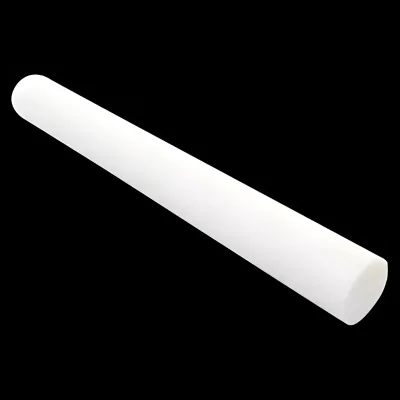
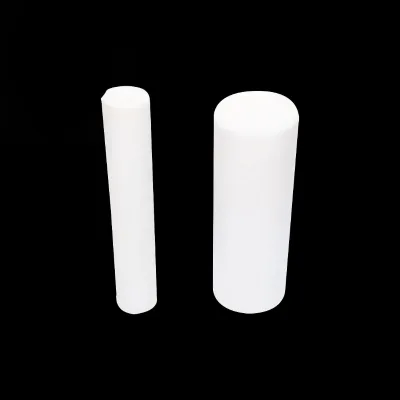
The physical dimensions of PTFE rods are highly variable, catering to diverse industrial needs. The market offers a wide spectrum of diameters, with standard ranges observed from 4.0 mm up to 300 mm. Specific product models, such as those designated as "rod" or "R001," often adhere to these broad sizing conventions. Buyers should be aware that while standard sizes like "Dia6mm-300mm" are common, the extrusion process allows for significant customization.
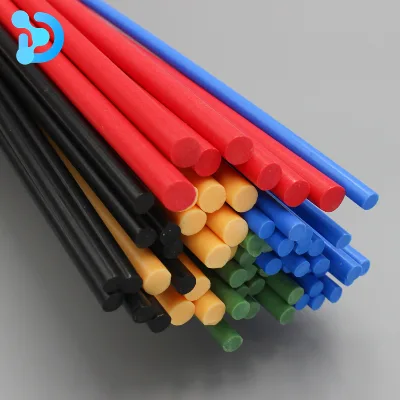
Customization is a primary feature of the virgin PTFE rod market. Suppliers frequently offer options to meet specific client requirements, with standards listed as "as your request" or "as your requirement." This flexibility extends to the production of specific model numbers like "DX0015" or "Virgin Extruded PTFE Rod," which may imply specific dimensional tolerances or surface finishes. The kind of product is often categorized broadly as "Hard Plastic Rods," "Color Plastic," or "Plastic Bar," indicating the versatility of the extrusion output.
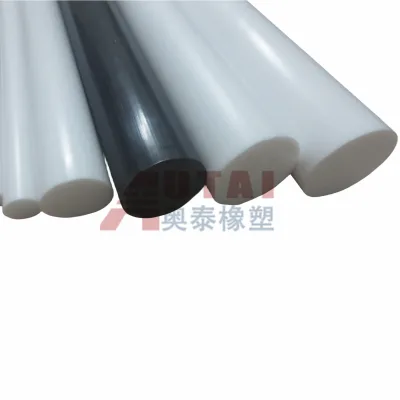
Color options are generally limited to White and Black, which are the standard offerings for virgin PTFE. While other colors exist in the broader plastics industry, the supplied data indicates these two as the primary available options. The contraction percentage, a factor critical for precision machining, varies significantly between product types. Some grades exhibit a contraction percentage between 2.0% and 5.0%, while high-precision extruded rods may show a contraction of less than 0.4%. This variance underscores the necessity for buyers to verify the specific contraction rate of the rod they intend to purchase, as it directly impacts the final dimensions of machined parts.
Compliance, Certification, and Quality Verification
Navigating the compliance landscape for PTFE rods requires a clear understanding of the distinction between material standards and third-party certifications. The supplied data indicates that the product standard is often defined simply as "PTFE" or "as your request," suggesting that the material composition itself is the primary standard. However, buyers must be vigilant regarding international safety and environmental regulations.
While background information may mention standards like ISO 9001, REACH, RoHS, or CE, these should not be assumed as automatic inclusions for every listed product. Instead, buyers must treat these as verification points. When evaluating a supplier, the procurement team should explicitly request documentation confirming compliance with REACH (Registration, Evaluation, Authorization, and Restriction of Chemicals) and RoHS (Restriction of Hazardous Substances) directives, particularly if the end application involves consumer goods or electronics. Similarly, CE marking may be required for products entering the European market, but its presence must be validated against the specific product batch.
Quality verification should also extend to the manufacturing origin. The supplied facts indicate that products originate from China, with specific mentions of Zhenjiang as a production hub. While this geographic data is factual, it does not inherently guarantee quality. Buyers should verify that the manufacturing facility in Zhenjiang or elsewhere adheres to rigorous quality control protocols. The "Virgin" designation in the product name implies the use of raw, unrecycled resin, which is essential for maintaining the high purity and performance characteristics of PTFE. Buyers should request material certificates of analysis (CoA) to confirm the virgin status and the absence of contaminants that could degrade the material's electrical or thermal properties.
Cost Drivers and Pricing Dynamics
The pricing of virgin PTFE extruding rods is influenced by several interconnected factors, primarily raw material costs, production complexity, and order volume. The observed price range in the market spans from 1 to 15 USD, though this likely reflects a per-unit or per-kilogram metric that varies based on the specific rod dimensions and the total quantity ordered. The wide range suggests that smaller diameter rods or lower volume orders may fall at the lower end, while large-diameter, high-precision rods command higher prices.
Minimum Order Quantity (MOQ) is a significant driver of cost efficiency. The observed MOQ range is extensive, spanning from 1 unit to 2000 units. This flexibility allows small-scale prototyping projects to access the material, but it also means that unit costs will be higher for small orders. For large-scale industrial procurement, negotiating an MOQ closer to the upper limit of 2000 units can significantly reduce the per-unit cost. Buyers should analyze their total annual consumption to determine the optimal order size that balances inventory holding costs with unit price savings.
Another cost driver is the level of customization. Standard rods with common diameters and colors (White, Black) are generally more cost-effective than custom-sized or specially formulated rods. The "as your request" standard implies that bespoke orders may incur additional setup or processing fees. Additionally, the packaging method can influence the final landed cost. The observed packaging options include "Fumigation Wooden Box," "Plastic Bag and Wooden Box," or "Plastic Bags and Wooden Boxes." Fumigation is a mandatory requirement for international shipping to prevent the spread of pests, and the associated costs are often passed on to the buyer. Buyers should clarify whether packaging costs are included in the quoted price or billed separately.
Supplier Evaluation and Operational Logistics
Selecting the right supplier for virgin PTFE rods requires a comprehensive evaluation of their operational capabilities, location, and logistical reliability. The supply chain for these materials is heavily concentrated in China, with Zhenjiang identified as a specific origin point. While this indicates a mature manufacturing ecosystem, buyers must assess the specific supplier's capacity to meet their timeline and quality expectations.
Lead times are a critical logistical consideration, though specific data points are not provided in the source material. Buyers should explicitly ask suppliers for estimated lead times, distinguishing between the time required for production and the time required for shipping. The complexity of the order, such as custom dimensions or large quantities, will directly impact the production schedule. For urgent projects, buyers should inquire about the possibility of expedited production or the availability of stock items.
Supplier evaluation should also include a review of their packing and shipping protocols. The variety of packaging options observed, from simple plastic bags to robust fumigation wooden boxes, suggests that suppliers have different capabilities in handling and protecting the product during transit. PTFE rods, while durable, can be susceptible to surface scratches or deformation if not packed correctly. Buyers should verify that the supplier uses appropriate cushioning and rigid outer containers to prevent damage.
Furthermore, the supplier's ability to provide technical support and documentation is essential. A reliable supplier should be able to provide detailed material data sheets, certificates of compliance, and assistance with machining recommendations. The "Kind" of product, whether listed as "Hard Plastic Rods" or "Plastic Bar," should be clearly defined in the supplier's catalog to ensure the buyer receives the exact material grade required for their application.
Typical Applications and Long-Term Procurement Strategy
Virgin PTFE extruding rods are utilized in a wide array of high-performance applications due to their unique combination of chemical resistance, thermal stability, and low friction. The low water absorption and high dielectric strength make them ideal for electrical insulation components, such as connectors, bushings, and spacers in high-voltage environments. The broad working temperature range allows these rods to be used in aerospace, automotive, and chemical processing industries where extreme temperatures are common.
In the chemical industry, the inertness of PTFE makes it suitable for seals, gaskets, and linings that must resist aggressive acids, bases, and solvents. The high compressive strength and low friction coefficient also make these rods excellent candidates for bearing components and wear plates in machinery. The specific contraction percentage of the material must be accounted for in the design phase to ensure that machined parts maintain their dimensional accuracy after the machining process.
For long-term procurement, buyers should establish a strategic partnership with a supplier that offers consistent quality and reliable supply chain logistics. Given the variability in technical specifications like tensile strength and contraction percentage, maintaining a relationship with a single, verified supplier can help ensure consistency across different production batches. Buyers should also consider the total cost of ownership, including the cost of machining waste and the lifespan of the final components. High-quality virgin PTFE may have a higher upfront cost but can offer significant savings through reduced maintenance and longer service life.
| Feature | Observation Range | Verification Requirement |
|---|---|---|
| Density | 2.1 - 2.3 g/cm³ | Request Material Certificate |
| Working Temp | -180°C to 260°C | Confirm specific grade limits |
| Tensile Strength | 30 - 130 MPa | Verify test reports |
| Contraction % | <0.4% to 5.0% | Critical for machining tolerance |
| Packaging | Plastic Bag + Wooden Box | Confirm fumigation status |
| Origin | China (e.g., Zhenjiang) | Verify factory audit reports |
By adhering to these guidelines and focusing on verified data, buyers can navigate the complex market for virgin PTFE extruding rods with confidence, ensuring they source materials that meet their rigorous technical and operational requirements.
FAQs
What is the working temperature range for virgin PTFE rods?
The working temperature range is typically -180°C to 260°C. Some specifications extend the maximum produce temperature to 390°C, while the brittle point temperature reaches as low as -268°C for cryogenic resilience.
Which density values apply to virgin PTFE extruding rods?
Density values generally fall between 2.1 and 2.3 g/cm³. Specific extruded variants often cite a narrower range of 2.15 to 2.25 g/cm³, which is critical for calculating weight and volume in engineering designs.
Can buyers request custom dimensions for PTFE plastic rods?
Yes, customization is available with standards listed as 'as your request'. Suppliers offer flexibility for specific model numbers and diameters ranging from 4.0 mm to 300 mm based on client requirements.
What is the tensile strength range for these plastic rods?
Tensile strength varies by grade, ranging from 30 to 40 MPa for certain types. Higher-performance extruded rods may demonstrate tensile strength between 81 and 130 MPa depending on the formulation.
How are virgin PTFE rods typically packed for shipping?
Packing options include plastic bags with wooden boxes or fumigation wooden boxes. The specific packaging method is selected to protect the product during transit and comply with international shipping regulations.
What color options are available for virgin PTFE rods?
Standard color options are limited to White and Black. These are the primary available colors for virgin PTFE, though other colors exist in the broader plastics industry.
Where are these virgin PTFE rods primarily manufactured?
Products originate from China, with specific mentions of Zhenjiang as a production hub. Buyers should verify that the manufacturing facility adheres to rigorous quality control protocols regardless of the specific location.